

The Song Remains The Same
An example of history and poetry intersecting - and what we can learn from it.

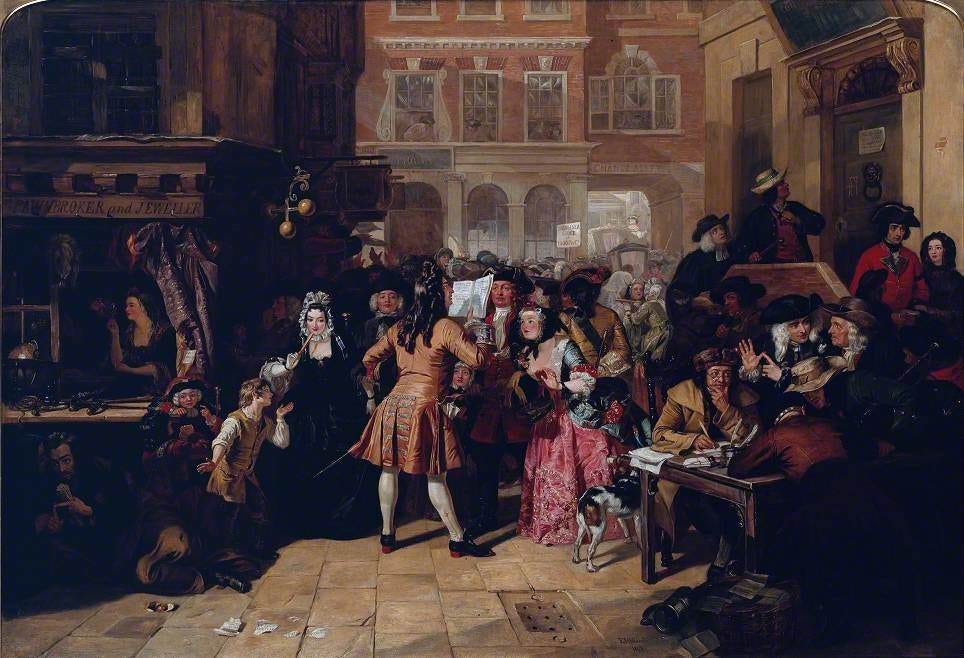
I’ve begun exploring the works of Henry Price - a poet from the 1700s who lived in one of the buildings now used as part of the Poole Museum complex - in anticipation of a larger collaboration project with the museum. He wrote across a range of subjects, including satirical verse, translations of Latin and Greek, as well as epitaphs for the townsfolk of Poole.
One piece in particular, however, caught my interest: a piece written in 1721 titled “On The South Sea Directors”.
Since Virgil hath, great Sirs, ye know
Vouchsafed to tell you long ago,
That the black gates of gloomy Pluto,
By Cerberus are never shut to,
I only bid you have a care
Lest some of you should drop in there.
Brave Hector still his thoughts employ'd
To guard what lion then enjoy'd,
And for its treasures, and the lake
Of his dear consort, Andromach,
Knock’d several thousands on the head,
And wing'd his course o'er heaps of Dead
Yet he was hurry'd down to hell,
When by the Pelian Spear he fell
If therefore Nick. would not spare Hector,
Much less a fly South-Sea Director.
More well-known poets like Jonathan Swift also penned their own verses on the collapse of the South Sea Company. Much like Swift, Henry Price had an unsavory view of the Directors, and leans into satirizing Greek myth to show how they will not escape judgement for their wrongdoings.
I had no idea what the South Sea Company was before reading this piece - it was simply a part of history I had never been told about. Yet, is well-recorded if you look online and is covered on some school syllabuses. Looking at the story now, however, gives me a much more nuanced and critical lens I would have most certainly lacked at a younger age. Not only are the events themselves important, creating the conditions needed for the Bank of England to take full control of government financing, but the parallels to what happened here with what is now happening in the world today could not be more striking.
Blowing A Bubble
Before the formation of the South Sea Company, there had really only been one small stock-market crash in the 1690s, caused by a credit crunch after the Nine Years War and widespread “clipping” of silver coins. However, there were not many people invested into the companies that failed at this time as a result, so the implications were not so dramatic.
That brings us to 1711, where the South Sea Company is set up as a public-private partnership to reduce the national debt (i.e. government debt) through trading with South America, which focused mostly on providing African slaves to the colonies there. They were granted an exclusive monopoly by the government of the time to conduct trade of any kind in the region, on behalf of the UK government.
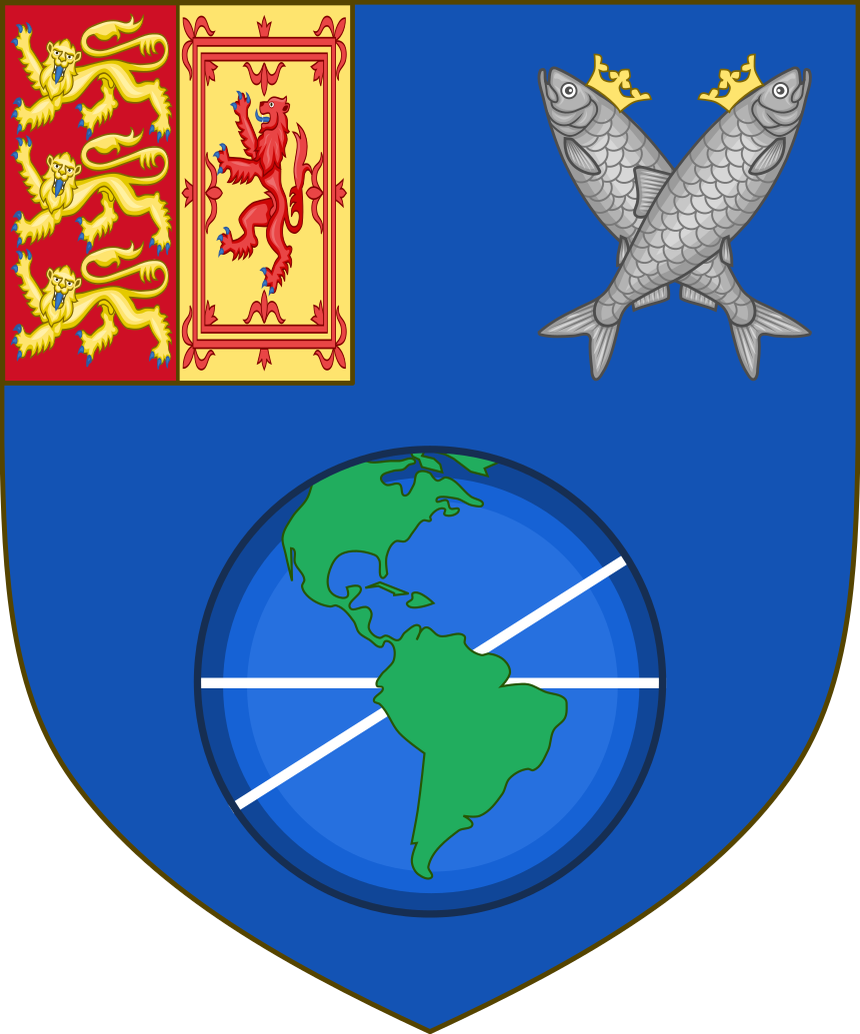
Minus the immoral nature of slavery, there are a number of issues with the concept, which more people should have cottoned on to. The very fact that Spain and Portugal controlled most of South America at this time in history - just after we were at conflict with these countries over Spanish Succession and how they weren’t particularly keen on trading with the British as a result - makes this choice of business to pay off the cost of the country’s debt to be one that was surely destined for failure…
And it showed. The company barely made any profit under the contract it had with the British Government. And yet, it somehow convinced the government to continue taking on government debt for various business ventures. King George I even took over as the owner of the company, causing stock prices to rise speculatively. But, without any meaningful real business operations, the company was really just trading itself against the debt it was buying from the government. This was made possible through all sorts of backdoor bribery of politicians, and misleading the public on how profitable the company’s activities in South America actually were.
It’s clear that the South Sea Company was never meant to be a profitable trading empire: it was a way of privatizing the government’s debt. And it all came crashing down in 1721, when the stock price dropped over 80% of its all-time-high value. Private investors lose a bunch of their money, public-private partnerships are banned unless they have royal assent, and the Bank of England becomes the de-facto private organization managing the reduction of government debt.
Who Was Blowing The Bubble?
That covers the version of events that most history books give - but I knew there was more to this story. Thankfully, I found an excellent write-up by Matthew Ehret on Jonathan Swift and the subversion of the British state occurring at the time - as well as where the South Sea Company fits into the picture.

I recommend reading the full piece, but I’ll do my best to summarize.
Britain had just experienced a major political upheaval prior to the formation of the South Sea Company. The City of London - itself a private corporation intended to support the Venetian merchant class (who descend from the Roman empire) - had been working hard to infiltrate the political workings of the United Kingdom to their own benefit. Their control of the Whigs in Parliament and the use of starting new wars to make money for themselves - which used the Bank of England as a key tool to do this - had been identified by “an anti-imperial faction” within Parliament. Queen Anne came to see how the Venetians had deceived her through her close advisers, and set about “draining the swamp” through dissolving Parliament, appointing a new Prime Minister and forcing much of the old Whig guard to resign.
This new Prime Minister, Robert Harley, saw the role that the Bank of England played in justifying endless government debt, and sought to replace it through a new initiative. That, of course, being the South Sea Company. It seems as though the South Sea Company was set up with honest intentions of clearing the nation’s debt through creating trade, under the premise that peace with all the countries they had previously been at conflict with was absolutely possible. It should be noted it had interest in trading things beyond slaves, too.
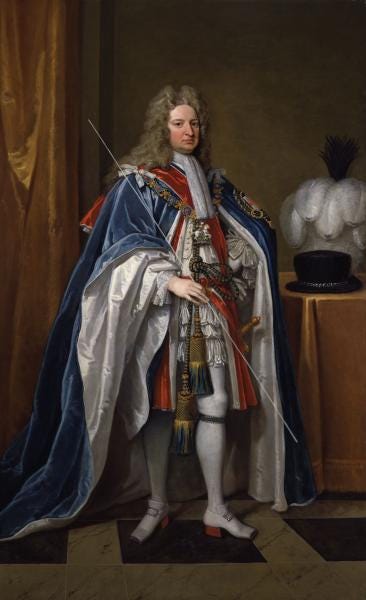
However, with the mysterious deaths of all the prospective leaders of France who wished to end their various wars and bring peace - as well as Queen Anne herself - the progress was sabotaged. Venetian and Whig-aligned individuals found their way back into positions of power, including through the newly-appointed King George I, and Robert Harley was imprisoned in the Tower of London.
Now, the Venetians were in prime position to turn the South Sea Company into nothing more than a speculative bubble through taking on more and more debt - helped by making George I the new “owner” of the company - and then pull the rug at just the right time to engineer a massive economic crash. Why? Because it gave the perfect pretext to clear out the remainder of the Parliamentarians opposing the takeover of the country by Venetian interests, bring in a Whig (Robert Walpole) as a new Prime Minister, ban the creation of other public -private partnerships that were not approved by the King (that they controlled!) and, most importantly, discredit schemes like the South Sea Company in order to establish the Bank of England as the main private company responsible for helping to manage government debt.
Modern Implications
This lens gives us a much clearer image on the circumstances around the South Sea Company, including why so many poets were talking about it. The people that Robert Harley and Queen Anne gathered round them were the likes of Jonathan Swift and other poets, playwrights and philosophers. They clearly valued making an intellectual and moral case against the imperial capture of Britain through creative arts, as opposed to the deception of the Venetian-backed politicians.
It is the poetry of the time, from the likes of Swift and Price, that give us an insight into this - and an insight into the same kinds of struggles we are facing today. We have since witnessed (and continue to witness) the interests of a war-hungry, devil-worshipping global cabal attempting to influence the world stage for their own gain, using all the same systems they learned how to perfect during this period of history. Their poetry is perhaps one of the most powerful warnings we have that it would not be wise to make these same mistakes again; to not give up where they have lost.
The theme I’ve found throughout all of this has been that poetry is a teacher. Poetry can help us set the narrative straight when other modalities fail. Poetry records the sentiments and a truth of a time in a way other efforts do not. This exploration has been a call-up for me and my pursuit of mastering my word through poetry, knowing that there may be a time in the future where someone else can learn from my own writings in pursuit of sovereignty, freedom, and morality.
The song remains the same… until we write a better one.
As one final note on Henry Price, I find it interesting he had many other pieces aligned with the sentiments of those gathered around Queen Anne, Robert Harley and Jonathan Swift, including a poetic attack on the Duke of Malborough - an ally of the Venetians known to be making vast sums of money from having Britain involved in wars, conflicts in Europe and through insider trading with the City of London. I find these extracts telling:
Eager for glory, and require the fight.
So the staunch hound the trembling deer pursues,
And smells his footsteps in the tainted dews,
The tedious track unravelling by degrees:
But when the scent comes warm in every breeze,
Fired at the near approach, he shoots away
On his full stretch, and bears upon his prey.
[...]
How many generous Britons meet their doom,
New to the field, and heroes in the bloom!
The illustrious youths, that left their native shore,
To march where Britons never march'd before,
Edited excerpts from “Part of the Campaign” ~ Henry Price
He clearly had a liking for Jonathan Swift’s work, and I like to think he too saw the impact of the globalist influence creeping into Britain, especially as it pertained to the lives of working people in Poole - which makes me even more excited to continue working on this project.
There’s plenty of other moments in history where poetry gives a fascinating insight into the sentiments of the time. Leave a comment and let me know if you’d like me to do more pieces like this.
Thank you for making the time to read this piece. If you’d like to support my work financially, please consider making a one-time donation or getting a copy of my poetry book, Go Forth, Butterfly! - these small things really helps to keep my efforts going.
And if you’re in need of poetic support in dealing with the challenges you’re facing in life, I can help.
I look forward to bringing you more soon.
With gratitude,
Tom
.
Epitaph Paragraph
Always giddy
Nuttin hurt
I be a lyin'
In da dirt
HA HA
Gloomy Pluto??
Holy karmic cycles, Batman!
Tho my muses are sick
It still pleases Nick
More please.
mark spark
.